
Bioburden testing vs sterility testing: what is the difference?
October 16, 2026 · 6 min read
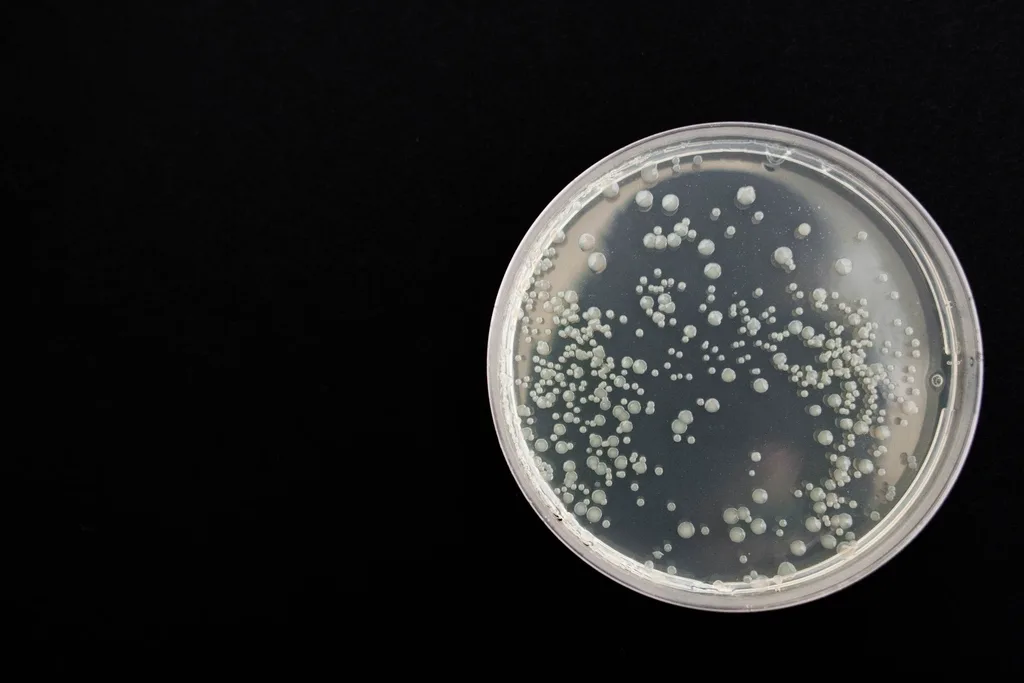
Bioburden testing and sterility testing are both microbiology tests, and both appear in almost every pharmaceutical quality system. They are often mentioned together, yet they answer two very different questions. Confusing them leads to wrong sampling plans, wasted tests and, in the worst case, audit findings.
This guide explains what each test does, when you need it, how long it takes, and where rapid microbiological methods can shorten the wait.
The short answer
- Asks: how many?
- Result: a count (CFU)
- Materials, water, intermediates
- Several days by culture
- Asks: any at all?
- Result: pass or fail
- Final sterile products
- 14 days by compendial method
- Bioburden testing asks: _how many_ living microorganisms are on or in this material? The result is a number, such as colony-forming units (CFU) per gram, per millilitre or per device.
- Sterility testing asks: _are there any_ living microorganisms at all? The result is pass or fail. A sterile product must show no growth.
Bioburden is a measure of contamination before or during a process. Sterility is a check on the final state of a product that is claimed to be sterile.
What is bioburden testing?
Bioburden is the population of viable microorganisms present on a raw material, an intermediate, a surface, water or a product before it is sterilized or released.
Why labs test bioburden
- To control incoming materials. Raw materials and excipients with high counts can overwhelm later process steps.
- To protect a sterilization step. Sterilization processes are designed for a certain microbial load. If the load is higher than expected, the process may not deliver the required sterility assurance.
- To monitor water systems. Purified water and water for injection (WFI) are tested routinely because water is a common source of contamination.
- To release non-sterile products. Tablets, syrups, creams and many food products are released against microbial limits rather than sterility.
Common bioburden methods
- Membrane filtration — the sample is passed through a membrane that retains microorganisms; the membrane is placed on growth media and incubated. This suits liquids and low counts.
- Pour plate — the sample is mixed with molten agar in a Petri dish and incubated.
- Spread plate — the sample is spread on the surface of set agar.
- Most probable number (MPN) — used for some materials where plate methods are unsuitable.
For pharmaceutical products, the pharmacopoeial tests for microbial enumeration (USP <61> and Ph. Eur. 2.6.12) describe total aerobic microbial count (TAMC) and total combined yeasts and moulds count (TYMC). For medical devices, ISO 11737-1 describes how to determine bioburden.
How long does bioburden testing take?
With conventional culture methods, plates must incubate until colonies are visible and countable. That takes several days, and yeasts and moulds usually take longer than bacteria. The exact incubation time depends on the method and your validated procedure.
That waiting time is why bioburden is often the slowest step in releasing intermediates or deciding whether a water loop is in control.
What is sterility testing?
A sterility test checks whether a product that is meant to be sterile — injections, eye drops, some medical devices — contains any viable microorganisms.
How it is done
The pharmacopoeial sterility test (USP <71>, Ph. Eur. 2.6.1) uses one of two approaches:
- Membrane filtration — the product is filtered, and the membrane is transferred into growth media.
- Direct inoculation — the product is added directly to growth media.
The media are incubated and inspected for turbidity, which indicates growth.
How long does it take?
The compendial sterility test requires 14 days of incubation. Only after that period can the lab conclude that no growth occurred.
What a sterility test can and cannot tell you
A sterility test samples only a small number of units from a batch. A pass shows that no contamination was detected in those units; it does not prove that every unit is sterile. That is why sterile manufacturing relies on validated sterilization, aseptic processing controls and environmental monitoring, with the sterility test as a final check rather than the only safeguard.
Side-by-side comparison
| Bioburden testing | Sterility testing | |
|---|---|---|
| Question | How many microorganisms? | Any microorganisms at all? |
| Result | A count (e.g. CFU/g, CFU/mL) | Pass or fail |
| Typical samples | Raw materials, intermediates, water, non-sterile products, devices before sterilization | Final sterile products |
| Main purpose | Process control, limits, sterilization design | Release of sterile products |
| Key references | USP <61>/<62>, Ph. Eur. 2.6.12/2.6.13, ISO 11737-1 | USP <71>, Ph. Eur. 2.6.1 |
| Conventional time | Several days of incubation | 14 days of incubation |
How the two tests work together
- 1Materials and waterBioburden
- 2Before sterilizationBioburden
- 3After fillingSterility test
- 4ThroughoutEnvironmental monitoring
In a sterile manufacturing process, the two tests sit at different points:
- Incoming materials and water are tested for bioburden to keep contamination low from the start.
- Before sterilization, bioburden shows the load the sterilization step must handle.
- After sterilization and filling, sterility testing checks the final product.
- Throughout, environmental monitoring checks the cleanroom.
A low, well-controlled bioburden makes a sterility failure far less likely. When a sterility test fails, bioburden and environmental monitoring data are the first places an investigation looks.
Where rapid microbiological methods help
The common problem with both tests is time. Product waits while plates and media incubate. Rapid microbiological methods (RMMs) aim to shorten or remove that wait.
- Bioburden: a rapid method that counts microorganisms without a growth step can turn a multi-day wait into minutes. For example, Microbs IAN counts bacteria, yeast and mould in liquid samples in about 15 minutes using solid-phase cytometry and artificial intelligence, with a limit of detection of 1 microorganism per sample.
- Sterility of filterable products: IAN also supports sterility testing of filterable final products, where the conventional wait is longest.
Any rapid method must be validated against the compendial method for its intended use, following guidance such as USP <1223>, Ph. Eur. 5.1.6 and PDA Technical Report 33. Read more about the validation path on our Rapid Microbial Testing page.
Practical tips for your lab
- Match the test to the question. Use bioburden where you need a number to control a process; use sterility testing where a product is labelled sterile.
- Watch trends, not single results. A slowly rising bioburden in a water loop is an early warning, long before a limit is exceeded.
- Identify what you find. Knowing which organism is present points to its source. MALDI-TOF identification makes this practical for every isolate — see Microbial Identification.
- Design sampling with production. Sampling at the right points saves more time than testing more samples.
- Plan for faster release. If quarantine time is a bottleneck, estimate what a shorter wait is worth before choosing a method.
Common mistakes to avoid
Testing the wrong thing. Running a sterility test on a non-sterile product, or relying only on bioburden for a product labelled sterile, answers the wrong question and wastes time.
Skipping method suitability. Some products contain preservatives or antimicrobial ingredients that stop microorganisms from growing on the plate. Without a suitability test (neutralisation and recovery), a low count may simply mean the method could not detect what was there.
Sampling only when it is convenient. Samples taken at the start of a shift, after cleaning, may look better than the process really is. Sample at the points and times that represent real risk.
Ignoring yeasts and moulds. They grow more slowly and are easy to under-count if plates are read too early.
Treating each result in isolation. A single result within limits can hide a rising trend. Plot results over time for each sampling point.
Not identifying isolates. A count without identification tells you there is a problem but not where it comes from.
Frequently asked questions
Is bioburden testing the same as a microbial limit test?
They are closely related. Microbial limit tests for non-sterile pharmaceutical products include enumeration of microorganisms (bioburden) and tests for specified organisms.
Can a product pass bioburden and still fail sterility?
Yes. Bioburden measures contamination before sterilization; a sterility failure can come from a sterilization or aseptic-processing problem after that point.
Why does sterility testing take 14 days?
The compendial method allows slow-growing organisms enough time to produce visible growth in the media.
Can rapid methods replace compendial tests?
They can, for uses that your lab validates as equivalent, following pharmacopoeial guidance on alternative methods.
Talk to us
If micro results are holding up release in your plant, our engineers can help you look at where a rapid method fits.
Explore Rapid Microbial Testing · Request a consultation · +880 1841-589897 · +880 1711-373646