
Know which microbe you found, in minutes
Microbial identification for pharma, food and research labs in Bangladesh. When an isolate turns up on an environmental monitoring plate or in an OOS result, the first question is always: what is it? Autobio's Autof MALDI-TOF systems answer that question at species level in minutes, and our engineers install, qualify and support them locally.
Why identification matters
A count tells you how many microorganisms are present. Identification tells you what they are, and that is what points to the cause.
- A skin organism on a cleanroom surface suggests a gowning or behaviour issue.
- A water organism suggests a problem in a water loop or a wet area.
- A spore-former or mould points towards raw materials, air handling or construction work.
Without species-level identification, these patterns stay hidden, and corrective actions become guesswork.
The problem with slow identification
- Biochemical kits take a day or more and do not always reach species level.
- Sending isolates out adds transport time and a cost per isolate, so labs identify fewer isolates than they should.
- OOS and deviation investigations stall while waiting for results.
- Environmental monitoring trends are weak when most isolates are never identified.
What your lab needs
Fast, reliable species-level identification in-house, at a cost per test low enough to identify every relevant isolate, with records that fit your quality system.
Our solution: Autobio Autof MALDI-TOF
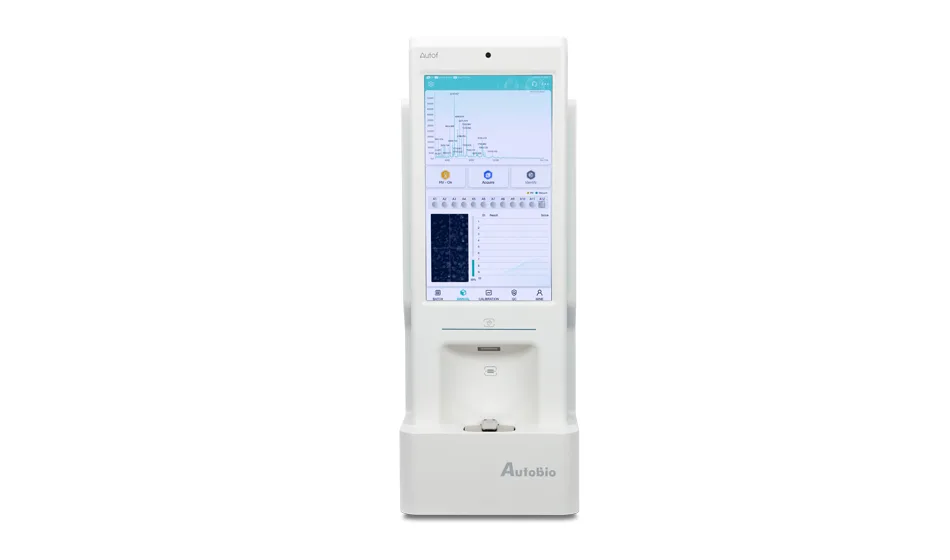
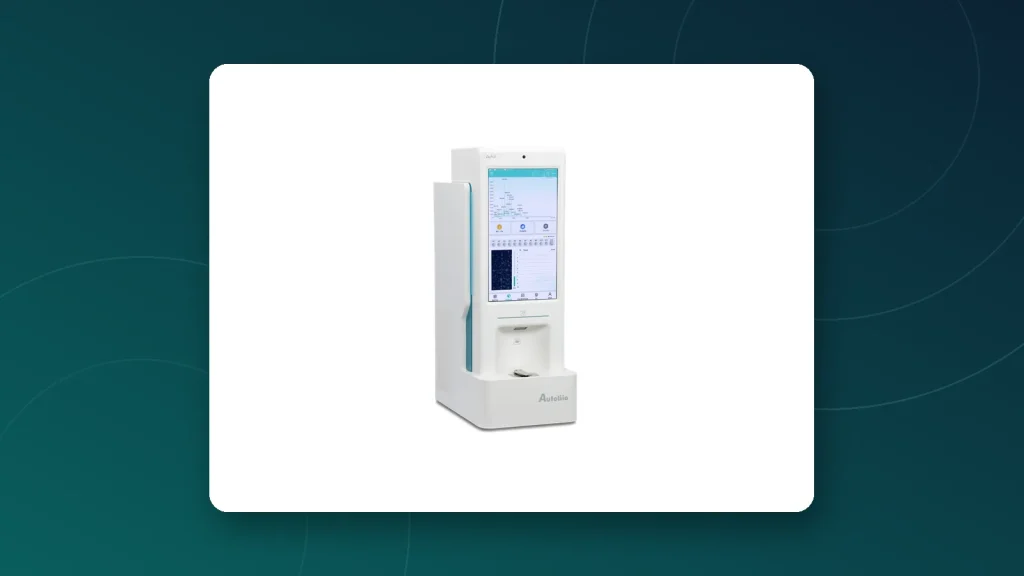
MALDI-TOF identifies a microorganism by reading its protein fingerprint and matching it against a reference database. The Autof series from Autobio brings this to routine labs.
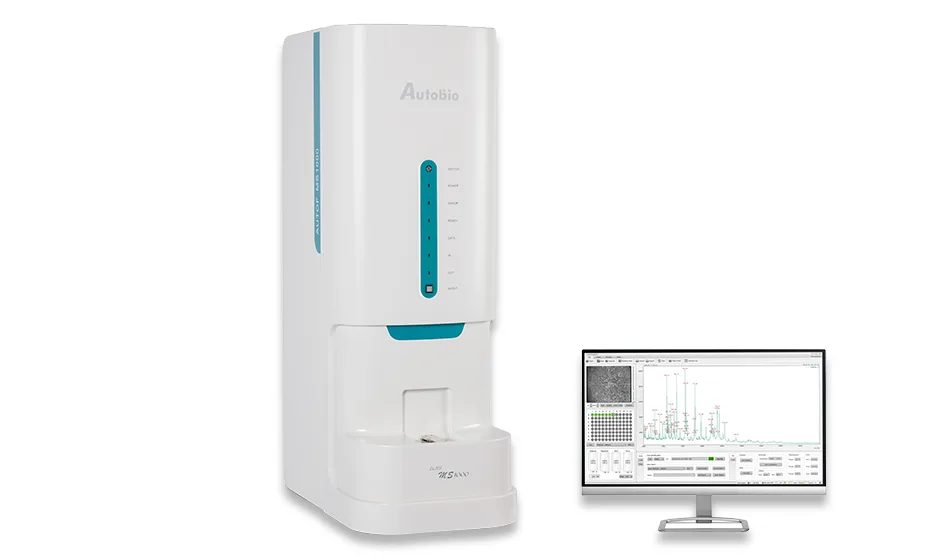
Key facts for the Autof ms1000:
| Database | More than 15,000 strains; 1,003 genera and 4,943 species |
|---|---|
| Organisms | Bacteria, yeasts, fungi, filamentous fungi |
| Target plate | Disposable, 96 spots |
| Hands-on time | 96 samples in under 20 minutes |
| Throughput | More than 1,000 samples per day |
The Autof ms2000 reads about 960 samples per hour (a 96-spot plate in about 7 minutes). The ms600 suits smaller labs, and the compact Autof TX8 saves bench space and accepts targets as samples arrive.
What comes with it
- Installation and commissioning by our engineers
- IQ/OQ executed on site by Pharma Biotech engineers
- Training for your microbiology team
- AMC for maintenance, repair and spare parts, across Bangladesh
How it works in your lab
- 1PickA colony from the plate
- 2SpotOn the target plate
- 3RunIn the Autof instrument
- 4ReadName and score
- 5RecordTrend with EM data
- Pick a colony from the plate.
- Spot it on the target plate and add matrix.
- Run the plate in the Autof instrument.
- Read the result: organism name and confidence score.
- Record and trend it with your EM data.
From colony to name takes minutes per sample, so an investigation can move forward the same day.
Where it helps most
Environmental monitoring. Identify recurring isolates by room and location, and spot trends before they become excursions.
OOS and deviations. Knowing the organism quickly narrows the root cause and speeds up CAPA.
Water systems. Recognise water-borne organisms and link them to specific loops or points of use.
Food and beverage QC. Identify spoilage organisms and contaminants to decide what to hold and where to clean.
Research and teaching. One instrument covers bacteria, yeasts and moulds across many projects.
Request Quote · WhatsApp an engineer
Benefits
- Technical: species-level identification in minutes from a single colony, with a large reference database.
- Commercial: a low cost per test compared with outsourcing, so every relevant isolate can be identified.
- Compliance: faster, better-documented investigations and stronger EM trend data for DGDA and export audits.
- Local support: installation, qualification, training and service from our own engineers.
In-house or outsourced?
- Answer in days
- Pay per isolate
- Few isolates identified
- Data with an external lab
- Answer in minutes
- Low cost per test
- Every relevant isolate
- Data in your quality system
| Outsourced | In-house Autof | |
|---|---|---|
| Time to answer | Days | Minutes |
| Cost | Per isolate | Low consumable cost per test |
| Isolates identified | Often only a few | Every relevant isolate |
| Data | External lab | Your quality system |
Independent evaluations
The Autof ms1000 and ms2600 have been assessed in peer-reviewed studies alongside other MALDI-TOF systems, mostly in clinical labs. See the studies on the Autof series page. For pharma use, we include a comparison with your own isolates during qualification.
Proof
- Authorized Autobio distributor in Bangladesh.
FAQ
What does a microbial identification system do?
It names the microorganism you isolated, usually to species level, so you can find the source of contamination.
How is MALDI-TOF different from biochemical kits?
MALDI-TOF reads the organism’s protein fingerprint in minutes; biochemical kits rely on growth reactions that take a day or more.
Can it identify moulds and yeasts?
Yes. The Autof database covers bacteria, yeasts, fungi and filamentous fungi; some need a short extraction step.
Is it suitable for a pharma QC lab?
Yes, for EM and OOS isolates. We qualify it on site with your own isolates.
What does it cost?
It depends on model, database and service. We quote the instrument and the cost per identification.
Find the right model
Request Quote · WhatsApp an engineer
Related: Autof series · Rapid Microbial Testing · Pharmaceutical
Related
Tell us what your lab needs
An engineer replies with a recommendation and a quote.