
Microbial counts in 15 minutes, not 14 days
Rapid microbial testing for pharma and food QC labs in Bangladesh. Culture-based methods hold batches in quarantine while plates incubate. Microbs IAN counts bacteria, yeast and mould in liquid samples in 15 minutes, and our engineers install, validate and support it in your lab.
Result in 15 min No growth step 21 CFR Part 11 Installed & validated locally
Why microbiology is the slowest step in batch release
In most QC labs, chemistry results are ready within hours, but microbiology results take days. The reason is simple: the classic methods need microorganisms to grow into visible colonies before anyone can count them.
- Total aerobic microbial count and yeast & mould count use plates that incubate for several days before they can be read.
- Sterility testing under the pharmacopoeial method needs an incubation period of 14 days.
- Water and environmental monitoring follow the same growth-based logic, so a trend is only visible days after the event.
While plates incubate, finished product and intermediates wait in quarantine. That ties up warehouse space and working capital, delays dispatch, and makes it hard to react quickly when something goes wrong.
What this costs a plant
Every day a batch waits for micro results has a cost: storage, capital locked in stock, delayed shipments and, for export plants, delayed invoices. When a result is out of specification (OOS), the investigation often needs another round of culture, adding more days before a root cause is clear.
A simple way to size your own opportunity:
Days saved per batch × value of the batch × batches per year
= working capital released each year
What a modern QC lab needs from a rapid method
Speed alone is not enough. A rapid microbiological method (RMM) earns its place in a GMP lab when it meets four needs:
- Fast enough to act on the same shift, not the same week.
- Accurate at low counts, because pharma limits are low and a single organism can matter.
- Audit-ready data, with complete, traceable records that meet data-integrity expectations.
- A local partner who can install the system, execute qualification and keep it running.
Our solution: Microbs IAN with local validation
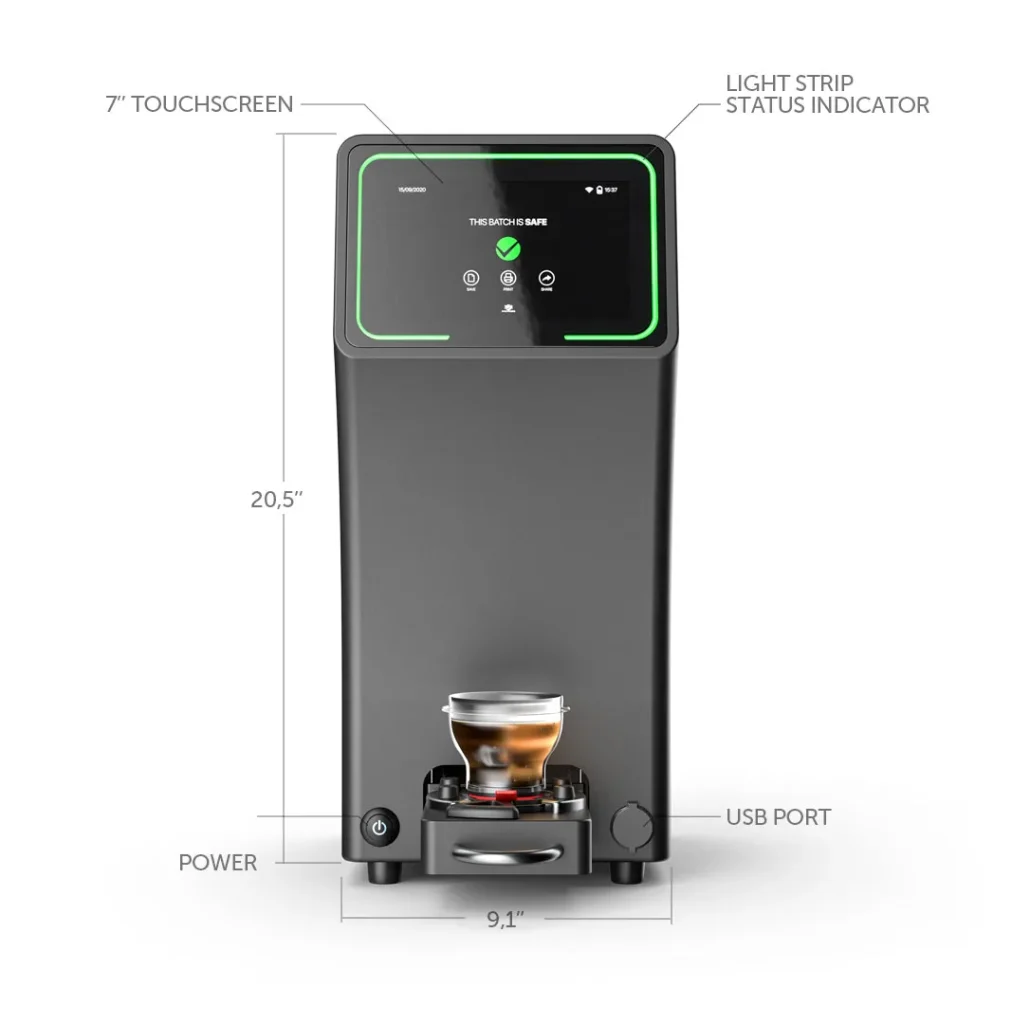
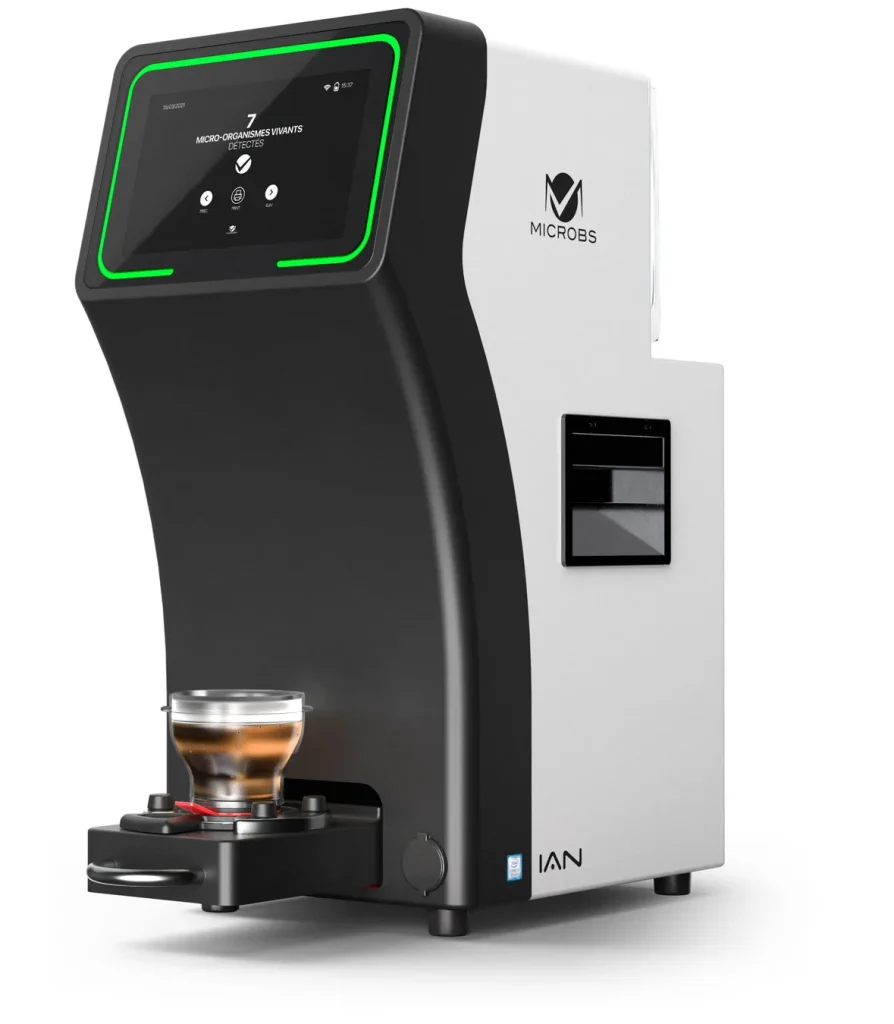
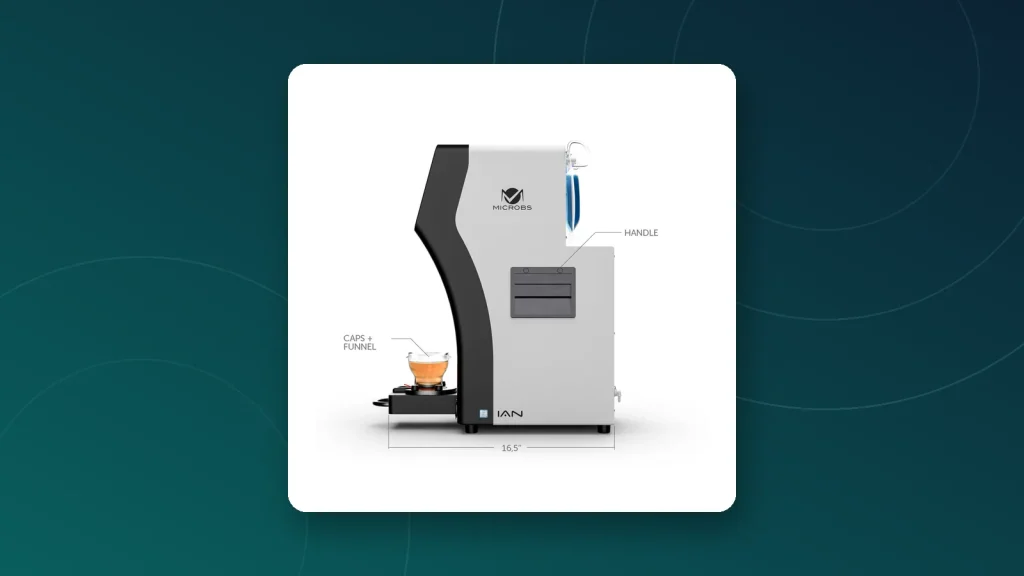
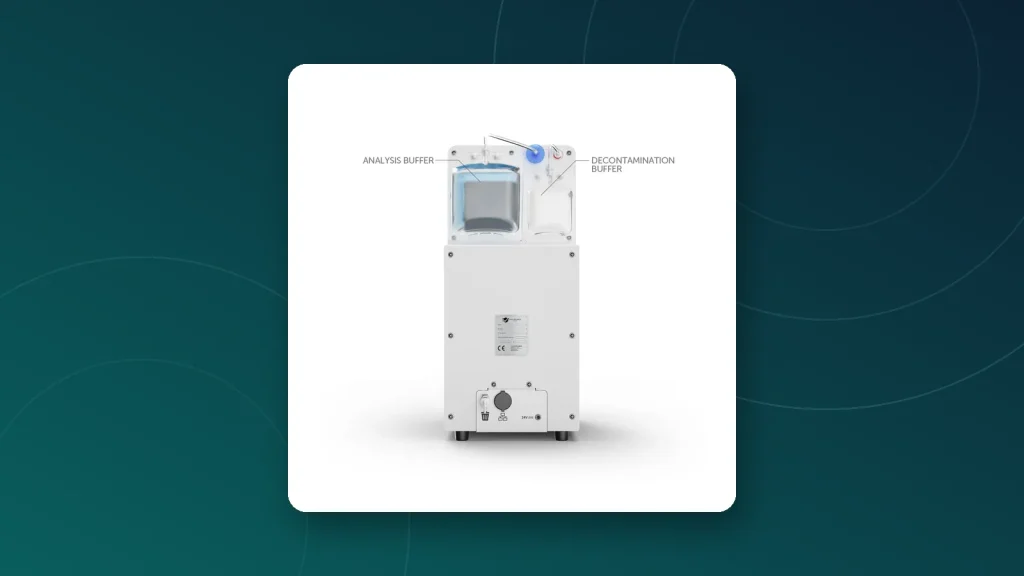
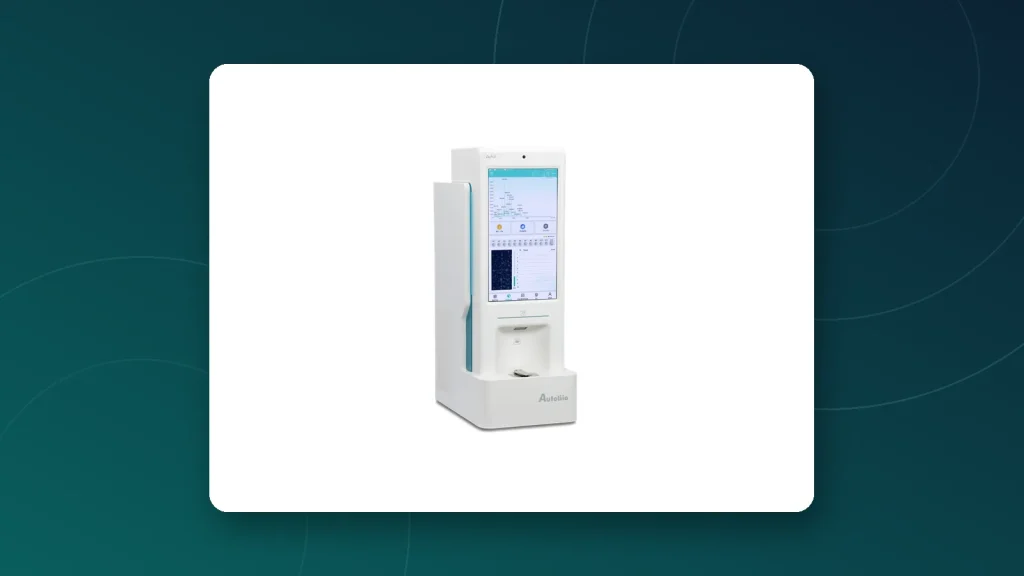
Microbs IAN is an ultra-rapid microbiological method from Microbs (Rennes, France). It uses solid-phase cytometry combined with artificial intelligence to detect and count microorganisms directly, without waiting for them to grow.
| What you get | Details |
|---|---|
| Time to result | 15 minutes |
| Detection | Bacteria, yeast and mould; limit of detection 1 microorganism per sample |
| Analysis | Qualitative and quantitative |
| Samples | Liquid matrices; total aerobic and anaerobic flora |
| Consumable | Ready-to-use TVC cap, no enrichment step |
| Operation | Fully automated; no specialist expertise needed |
| Data integrity | 21 CFR Part 11 |
Source: Microbs.
How IAN works, in three steps
- 1PrepareReady-to-use TVC cap
- 2DetectSolid-phase cytometry
- 3CountAI reports in ~15 min
- Prepare — the liquid sample is processed with the ready-to-use TVC cap. No enrichment and no multiple reagents to manage.
- Detect — solid-phase cytometry labels and scans the microorganisms captured from the sample.
- Count — artificial intelligence classifies what the scan finds and reports the result, in about 15 minutes from start to finish.
What comes with every system
- Installation and commissioning by our engineers
- IQ/OQ/PQ executed on site by Pharma Biotech engineers, using protocols from Microbs or Pharma Biotech
- Operator training for your microbiology team
- AMC option for preventive maintenance and support
Our engineers are based in Dhaka and travel across Bangladesh.
See full Microbs IAN specifications →
Where rapid testing fits in your lab
Bioburden testing
Raw materials, intermediates, WFI and process water. Faster bioburden results let production decide sooner whether a material or a water loop is fit for use.
Sterility testing of filterable products
IAN supports sterility testing of filterable final products, where the conventional incubation period is the longest wait in the release chain.
Environmental monitoring
Surfaces, people and air. Quicker counts turn environmental monitoring from a record of what happened last week into information you can act on today.
Out-of-specification investigations
When a result is out of limit, a 15-minute re-test helps an investigation move from hypothesis to evidence much faster.
Request Quote · WhatsApp an engineer
How IAN compares with other approaches
| Approach | How it detects | Time to result (as stated by makers / methods) | Growth step needed |
|---|---|---|---|
| Conventional plate count | Visible colonies | Several days of incubation | Yes |
| Conventional sterility test | Turbidity in media | 14 days | Yes |
| ATP bioluminescence (e.g. Celsis) | Light from microbial ATP | ~24 h for non-sterile; ≤7 days sterility | Yes (enrichment) |
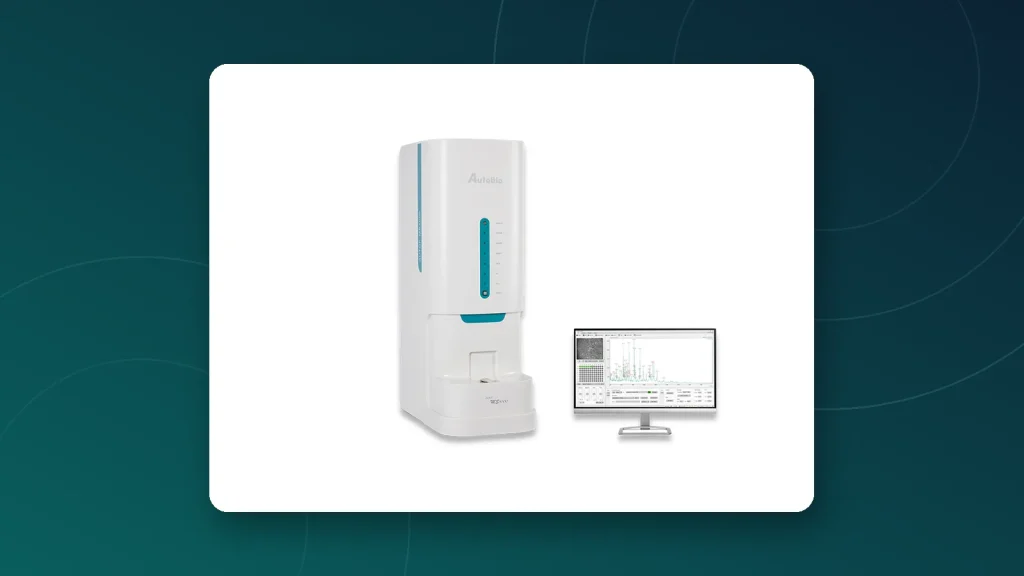
| Autofluorescence imaging (e.g. Growth Direct) | Micro-colonies imaged early | About half the time of culture | Yes (shorter) |
| Membrane-based rapid detection (e.g. Milliflex) | Detection on membrane | Faster than plate count | Yes (shorter) |
| Microbs IAN | Solid-phase cytometry + AI | 15 minutes | No |
Sources: Charles River (Celsis), Rapid Micro Biosystems (Growth Direct), MilliporeSigma (Milliflex), Microbs (IAN). Brand names belong to their owners; Pharma Biotech is not a distributor of those systems.
The practical difference is the growth step. Methods that still need organisms to grow can shorten the wait, but they cannot remove it. IAN removes it.
Validation: how IAN enters your GMP lab
- 1RequirementsTests and criteria
- 2IQInstalled as specified
- 3OQWorks across its range
- 4PQEquivalent on your samples
- 5SOPInto your quality system
Regulators accept alternative microbiological methods when the lab shows they are at least equivalent to the compendial method for the intended use. Pharmacopoeial and industry guidance, such as USP <1223>, Ph. Eur. 5.1.6 and PDA Technical Report 33, describe how to do this.
A typical path looks like this:
- User requirements — which tests IAN will replace or support, sample types and acceptance criteria.
- Installation Qualification (IQ) — the system is installed as specified.
- Operational Qualification (OQ) — the system operates as intended across its range.
- Performance Qualification (PQ) / method validation — IAN is compared with your current method on your own samples.
- Change control and SOPs — the method is written into your quality system.
Protocols come from Microbs or Pharma Biotech; our engineers execute them in your lab, and your QA approves.
Building the business case inside your company
A rapid method is usually approved by three groups at once: QC wants accuracy, QA wants compliance, and management wants a return. A short internal case that answers each of them moves the decision forward.
For QC: list the tests that hold product longest today — bioburden of intermediates, water, finished-product micro — and how many samples each needs per week. This shows where 15-minute results change daily work the most.
For QA: show the validation path (above), the data-integrity features and how the method enters change control. QA teams are more comfortable when the supplier executes IQ/OQ/PQ locally and leaves complete documentation.
For management: use the working-capital formula with your own batch values and release times. Add the softer gains: fewer delayed shipments, faster OOS closure and a stronger audit story for export customers.
We help prepare this case during a consultation, using your figures rather than generic claims.
Preparing your lab for a rapid method
A smooth start depends on a few practical steps before the system arrives:
- Choose the first application. Start where the wait hurts most, often water or intermediate bioburden, then extend to other tests after the first validation.
- Collect representative samples. Validation compares IAN with your current method on your own sample types, so plan a sampling schedule early.
- Name a method owner. One microbiologist who leads the validation and trains colleagues keeps the project on track.
- Update SOPs in parallel. Draft the new SOP while qualification runs, so routine use can begin as soon as QA signs off.
- Plan the data flow. Decide how IAN results will be reviewed, approved and archived within your existing records.
Questions to ask any rapid-method supplier
Whichever system you consider, these questions separate a good fit from a costly one:
- Does the method need a growth or enrichment step, and how long is it?
- What is the limit of detection, and has it been shown on samples like mine?
- Which data-integrity features are built in (audit trail, user access, electronic records)?
- Who executes IQ/OQ/PQ in my lab, and who writes the protocols?
- What consumables are needed per test, and are they stocked locally?
- Who services the system in Bangladesh, and how are spare parts supplied?
For Microbs IAN, we answer each of these in writing with our quote.
Benefits at a glance
- Technical — counts in 15 minutes instead of days; limit of detection 1 microorganism per sample; no incubation.
- Commercial — Microbs states users can save up to 14 days of quarantine time, which means earlier release, less stock on hold and faster invoicing.
- Compliance — 21 CFR Part 11 data integrity supports audits by DGDA and export regulators; a documented validation path.
- Local support — installation, qualification, training and AMC from one partner in Bangladesh.
Who uses rapid microbial testing
- Export-oriented pharma plants facing frequent audits and data-integrity expectations
- Large local pharma plants looking to shorten release times as capacity grows
- Food and beverage plants that hold product for micro results or monitor water and CIP quality
Pharmaceutical · Food & Beverage
Proof
- Pharma Biotech is the authorized Microbs distributor in Bangladesh.
- Validation package available on request.
FAQ
How fast is Microbs IAN?
Results in about 15 minutes from a liquid sample, with no growth step.
What can it detect?
Bacteria, yeast and mould, with a limit of detection of 1 microorganism per sample, both qualitatively and quantitatively.
Which samples can it test?
Liquid matrices, such as process water, WFI, dissolved raw materials, intermediates and filterable final products.
Is the data audit-ready?
IAN is 21 CFR Part 11 compliant for data integrity and traceability.
Does IAN replace my compendial method?
It can, for the uses you validate. Your lab demonstrates equivalence following guidance such as USP <1223> and Ph. Eur. 5.1.6; we execute the qualification with you.
Who installs and validates it?
Our own engineers install the system and execute IQ/OQ/PQ in your lab. Protocols come from Microbs or Pharma Biotech.
Do you support labs outside Dhaka?
Yes. Our engineers travel across Bangladesh for installation, validation and service.
How is IAN priced?
Price depends on configuration, consumables volume and service package. Request a quote with your sample types and daily volumes.
Talk to an engineer
Tell us your samples and daily volumes. An engineer will reply with a configuration, a validation outline and a quote.
Request Quote · WhatsApp an engineer
Related: Microbs IAN product page · Microbial Identification · IQ/OQ/PQ Validation · Bioburden vs sterility testing
Related
Tell us what your lab needs
An engineer replies with a recommendation and a quote.