
MALDI-TOF price: what drives the cost, and how to choose the right system
October 16, 2026 · 7 min read
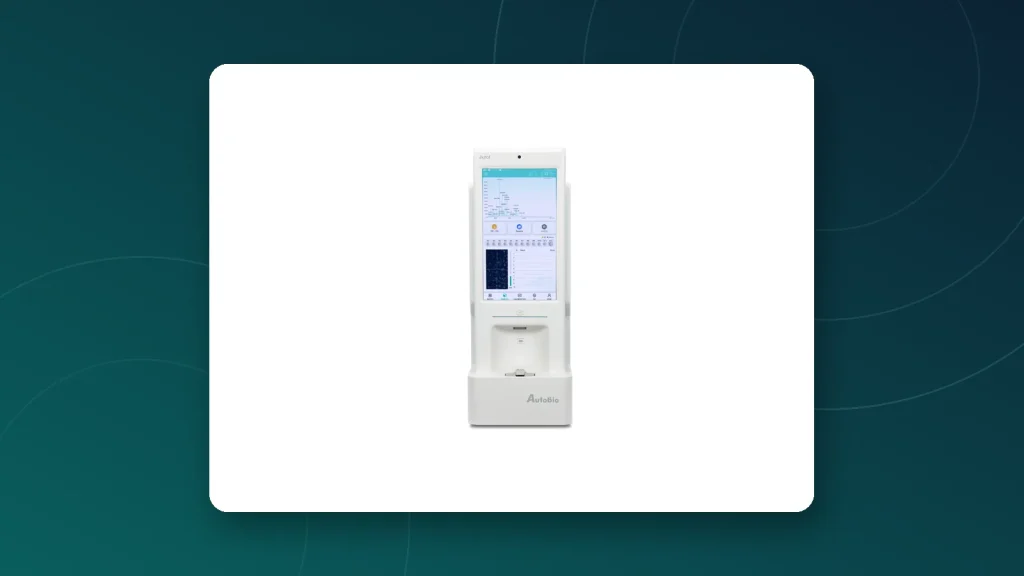
“What does a MALDI-TOF cost?” is usually the first question a lab manager asks, and the honest answer is: it depends on more than the instrument. Two labs can pay very different amounts for systems that look similar on paper, because the real cost is spread over the instrument, the database, the consumables, the installation and years of service.
This guide explains each part of the MALDI-TOF price, so you can compare quotations line by line and pick a system that matches your daily workload. We use the Autobio Autof range as the example, because those are the systems we supply and support in Bangladesh, but the same questions apply to any brand.
The short answer
The instrument is the largest single line, but over five or more years the consumables and service can add up to a large share of the total. Compare the total cost of ownership, not only the instrument price.
1. The instrument model
Within one brand, the biggest price difference comes from the hardware: the laser, the vacuum system and how fast the instrument reads a target plate.
The Autof ms series shows this clearly. All three models share the same footprint (450 × 705 × 1280 mm), but differ in laser and speed:
| Autof ms600 | Autof ms1000 | Autof ms2000 | |
|---|---|---|---|
| Laser | 337 nm nitrogen | 337 nm nitrogen | 355 nm solid-state |
| Speed (Autobio rating) | About 260 samples/hour | About 300 samples/hour | About 960 samples/hour |
| Laser life | 400 million shots | 400 million shots | 70 billion shots |
| Weight | 101 kg | 101 kg | 110 kg |
Source: Autobio product page and brochure.
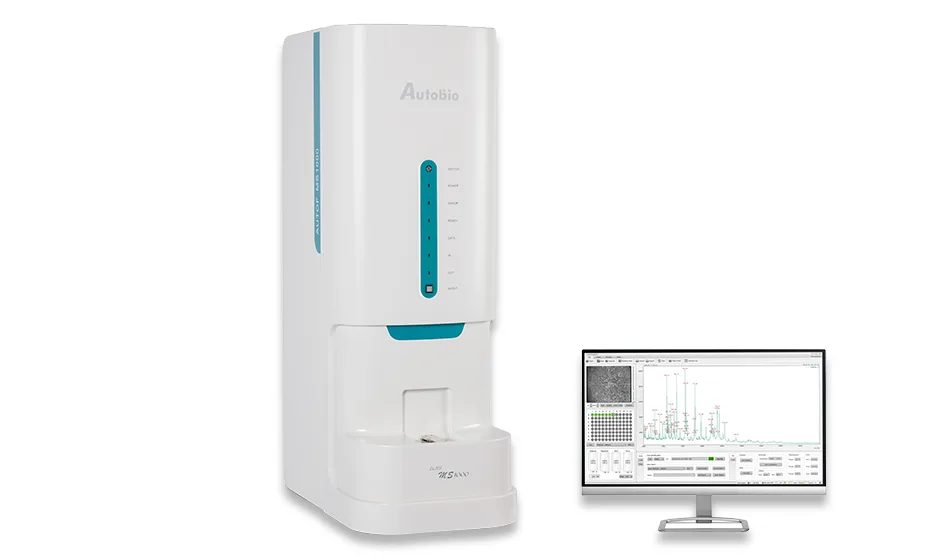
Two points are worth noticing:
- Laser life affects long-term cost. A nitrogen laser rated for 400 million shots will need replacing sooner in a busy lab than a solid-state laser rated for 70 billion shots. Ask how many shots your daily volume uses and what a replacement costs.
- Speed only matters if you use it. A lab that runs 20 isolates a day will not feel the difference between 300 and 960 samples per hour. A central lab serving several plants will.
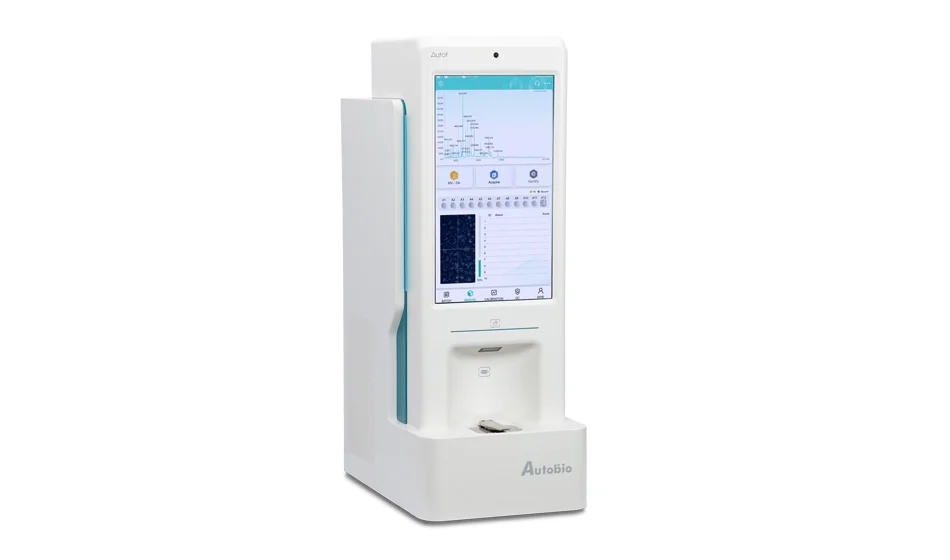
The Autof TX8 (T series) is a different design: a compact, touch-screen MALDI-TOF with continuous loading, so targets can be added as samples arrive. Autobio states it saves 85% of bench space, 70% of volume and 50% of weight compared with the Autof ms. For labs short on space, that can avoid building or rearranging a room.
2. Database and software
A MALDI-TOF is only as good as its reference library. The spectrum from your colony is matched against stored spectra; if the organism is not in the library, the system cannot name it.
Questions to ask:
- How many species and genera are covered? The Autof database holds more than 16,000 reference spectra covering over 5,000 species and 1,000 genera, with a separate filamentous fungi library of more than 450 species (Autobio).
- Does it cover your organisms? Clinical libraries are strong on pathogens. Pharma QC labs mostly see environmental isolates (skin flora, spore-formers, water organisms). Ask for coverage of your typical isolates.
- Are updates included? Autobio supports online database updates. Check whether updates are part of the price or a yearly fee.
- Can you add your own spectra? A customizable database lets you add in-house isolates that are identified once by sequencing, which is useful for recurring environmental organisms.
- LIS connection. Two-way LIS connection saves manual typing and reduces transcription errors. Confirm whether the interface is included.
3. Consumables per test
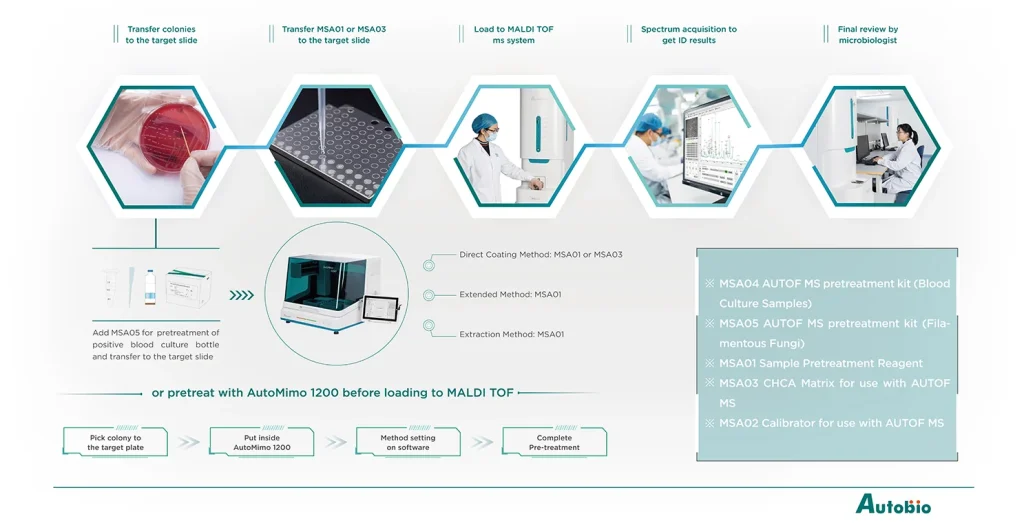
This is the line that is easiest to overlook. Every identification uses a spot on a target slide and a drop of matrix, and some sample types need a pretreatment kit.
For the Autof ms series, Autobio lists these accessories and reagents:
| Item | Pack |
|---|---|
| Sample pretreatment reagent | 100 tests |
| Calibrator for Autof MS | 80 tests |
| CHCA matrix | 0.5 ml × 4 bottles |
| Positive blood culture pretreatment reagent | 60 tests |
| Filamentous fungi pretreatment reagent | 120 tests |
| Target slide (disposable, 96 spots) | 10 pieces |
| Target slide holder (reusable) | 2 pieces |
Source: Autobio Autof ms brochure.
The Autof design uses a reusable target holder with disposable target slides, so there is no cleaning step between runs and no carry-over between batches. Systems with reusable steel targets save on slides but need a validated cleaning procedure and staff time.
To estimate your yearly consumables cost, multiply your expected identifications per year by the cost per test for each item, and add calibration runs. Ask every supplier for the same calculation so you compare like with like.
4. Installation and site preparation
A MALDI-TOF is a vacuum instrument with a laser. It needs:
- Space and floor loading for an instrument of around 100 kg (ms series), or a bench for the compact TX8.
- Stable power, ideally with a UPS sized for the instrument and computer. Power cuts during a vacuum run are hard on pumps.
- A controlled room with steady temperature and low dust.
Ask whether site assessment, unpacking, installation and the first calibration are included in the quotation, or charged separately.
5. Qualification and training
In a GMP lab, the instrument is not usable until it is qualified. Plan for:
- IQ/OQ at installation, with documents your QA can sign.
- Performance check with your own isolates, so you know how the system performs on the organisms your lab actually sees.
- User training for analysts and a key user who can handle routine maintenance and first-line troubleshooting.
These services have a real cost. Some suppliers include them, others quote them separately. We include installation, IQ/OQ and training in our proposal so the comparison is clear. See IQ/OQ/PQ validation and training.
6. Service over the life of the instrument
The vacuum pumps, the laser and the detector all need care. Over five to ten years, service decides how much downtime you have. Ask:
- Who services the instrument in Bangladesh, and how quickly can an engineer reach you?
- Are common spare parts held locally, or imported per case?
- What does an annual maintenance contract (AMC) cover: preventive visits, parts, laser, pumps?
- Is remote diagnosis available? Autobio supports remote diagnosis on the Autof ms series.
A lower instrument price with slow service can cost more in lost days than a higher price with a local engineer. See our AMC, repair and spare parts service.
How to size the system to your lab
- 1Count isolatesAverage and peak per day
- 2List organismsBacteria, yeasts, moulds
- 3Check spaceRoom, bench, power
- 4Compare 5-year costInstrument + consumables + service
- 5Plan qualificationIQ/OQ and own isolates
As a rough guide:
- A QC lab with a steady flow of environmental monitoring and OOS isolates usually fits an entry or mid model such as the Autof ms600 or ms1000.
- A central lab serving several plants benefits from the speed of the Autof ms2000.
- A lab short on space, or receiving isolates all day, should look at the compact Autof TX8.
Compare the models side by side on our Autof MALDI-TOF series page, or read about the microbial identification solution.
Is MALDI-TOF worth it compared with biochemical kits?
Biochemical identification kits have a low entry cost but a higher cost per test and take longer, often a day or more. MALDI-TOF reverses that: a higher entry cost, then a low cost per test and results in minutes per sample once a colony is available. In one published comparison, the Autof ms1000 analysed 96 spots in about 14 minutes (Park et al., 2021).
The break-even point depends on your volume. If your lab identifies isolates every day, or sends them out to another lab, the payback can be quick. If you identify a handful a month, a kit or an outsourced service may still be cheaper. We are happy to work through the numbers with your own figures.
Checklist for comparing quotations
- Instrument model, laser type and rated speed
- Database size, update policy and custom-library option
- Consumables price per test, and pack sizes
- Installation, site assessment and first calibration
- IQ/OQ documents and user training
- Warranty period and what it covers
- AMC price and scope after warranty
- Local engineer, spare parts and response time
- VAT, import costs and delivery time
Frequently asked questions
Why don’t suppliers publish MALDI-TOF prices?
Because the configuration changes the price: model, database options, consumables, services and import costs. A price without the configuration is not comparable.
What is the cheapest part of running a MALDI-TOF?
Usually the cost per identification, once the system is installed. The matrix and target spots for one test cost little compared with most kits.
Does a faster model cost more to run?
Not necessarily per test. A solid-state laser has a much longer rated life (70 billion shots on the Autof ms2000 against 400 million on the ms1000), which can lower long-term laser costs in busy labs.
Can a MALDI-TOF identify moulds?
Yes, with a pretreatment step and a fungi library. Autobio offers a filamentous fungi pretreatment reagent and a filamentous fungi database.
Get a quotation for your lab
Tell us your daily isolate volume, sample types and room, and we will recommend a model and send a full configuration with installation, qualification and service included.
Request a MALDI-TOF quote · Compare Autof models · +880 1841-589897 · +880 1711-373646